Portable Travel Grill Breakfast: Master Eggs Every Way
By Priya Nayar • 2nd May
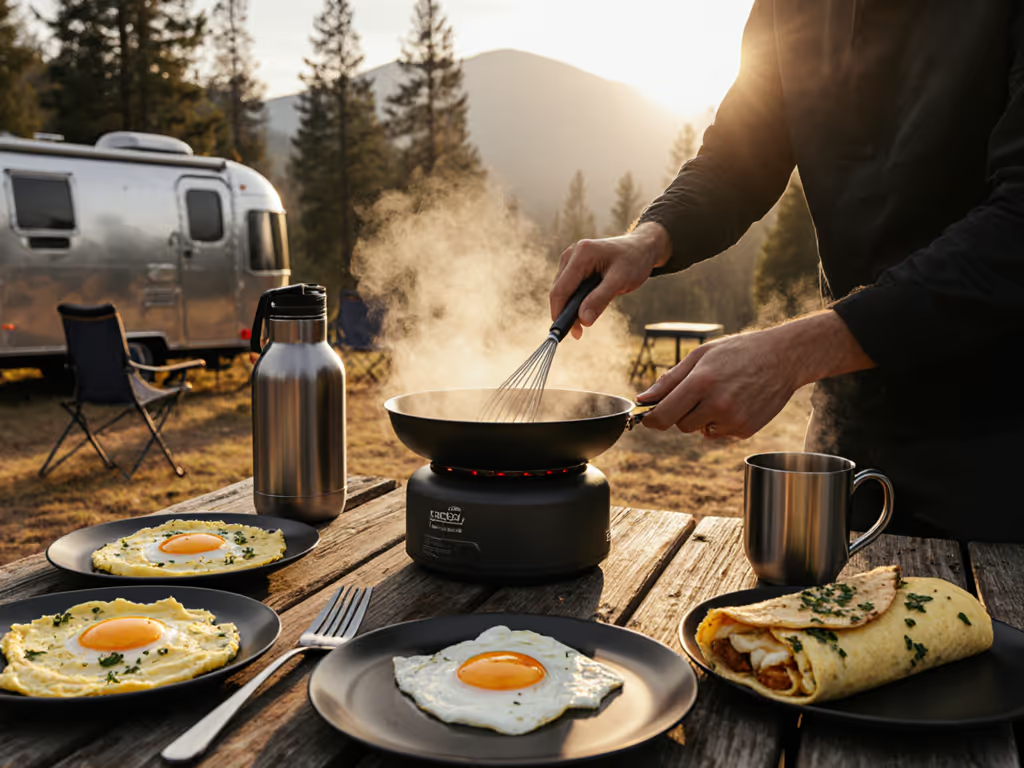
Building a portable travel grill breakfast kit is less about owning fancy gear and more about choosing a system that actually travels with you. Too many weekend cooks buy a compact grill, use it twice, then abandon it because setup feels slow, fuel choices feel risky, or cleanup keeps them at the campsite past departure time. If that's been your story, the difference isn't the grill, it's the modular kit mindset.
I learned this on an overnight train to the coast when the station vendor ran out of my usual fuel. I'd packed a folding grill with both butane and propane options, including a tiny adapter. While three hungry friends nearly panicked, I swapped fuels and we ate a four-person omelette at sunrise. That morning taught me something lasting: redundancy and standard canisters matter more than boutique fuels, and smart packing beats buying gear all over again. It also taught me to carry the fuel you can buy twice in town. If you travel across regions, bookmark our fuel adapters and connector standards international travel guide so a canister swap never strands breakfast.
This guide walks you through building a grab-and-go kit, mastering five breakfast grilling techniques for outdoor heat, choosing fuels that match your real constraints, and leaving no trace of breakfast chaos behind.
Your Essential Grab-and-Go Kit
A portable breakfast system lives in three components: Round out these basics with the right portable grill tools that actually pack small.
Grill: Under 5 lbs, folds flat, fuel-agnostic or dual-fuel-compatible. Stainless steel or aluminum; cast iron adds weight you won't carry twice.
Cookware: 8-inch non-stick skillet or griddle (under 1 lb). Lightweight aluminum or thin stainless.
Fuel + backup: A primary canister (propane 1 lb or butane cartridge) and a secondary option. Propane: nationwide availability, ~10-12 breakfasts per canister, ~$0.50-0.70 per meal. Butane: compact, ~$0.25-0.50 per meal, fails below 40°F.
Essentials: Heat-resistant cloth, microfiber wipe, biodegradable soap, windscreen (DIY foil or store-bought), closed container for ash/grease, lighter or matches.
Plain-language checklist:
- Does your grill fit your carry method (backpack, trunk, RV drawer)?
- Can you light it reliably (piezo + manual backup)?
- Do both fuel types sit in a sealed pouch (no rattles, no leaks)?
- Is your skillet heat-safe and packable?
Five Egg Techniques: From Scrambled to Shakshuka
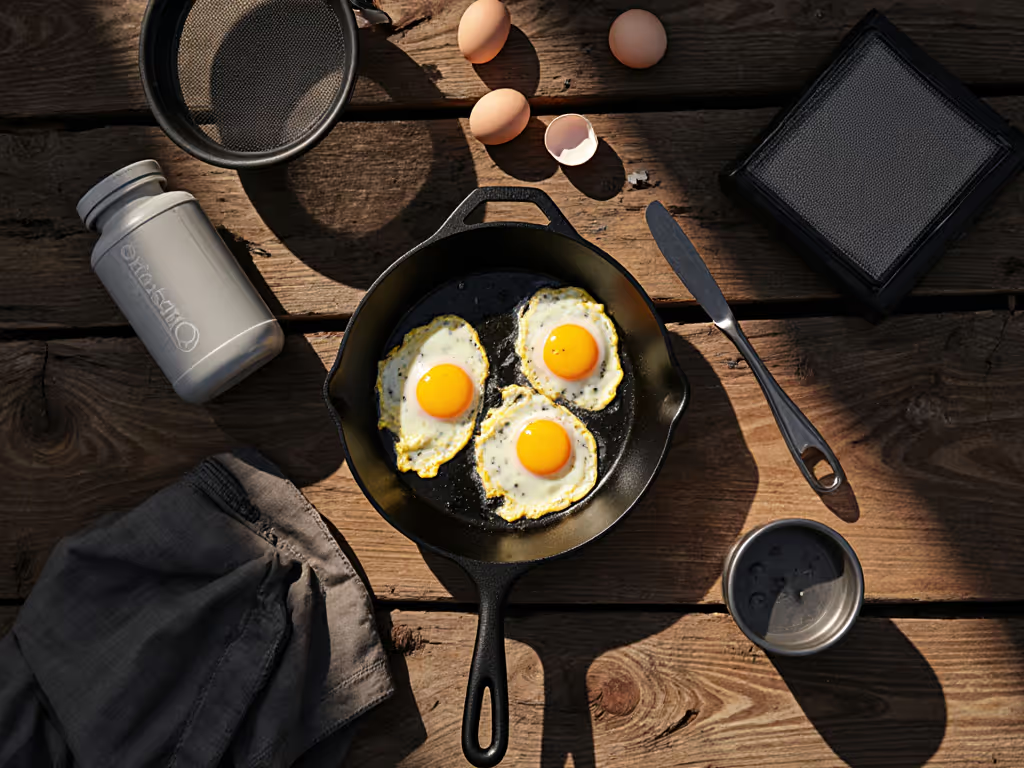
Scrambled Eggs: The Forgiving Start
Preheat to medium (flick water; it sizzles and evaporates). Add butter to skillet and let it foam gently. Crack eggs directly into the pan or a bowl, then whisk. Stir every 8-10 seconds, pushing curds from edges to center. Remove when slightly wet; carryover heat finishes them. Scrambled eggs are wind-resilient because constant motion masks uneven heat. Cost: ~$0.50-0.60 per person.
Fried Eggs (Sunny-Side or Over-Easy): The Showstopper
Preheat to medium-low (let water take 5-7 seconds to sizzle gently). Add oil; wait for shimmer. Crack eggs into the pan, space them 2 inches apart, and do not disturb them. Let whites set (2-3 minutes). For over-easy, flip once whites are opaque but yolk jiggles (another 30 seconds per side). If wind is pushing flame, tilt the skillet slightly to compensate. Fried eggs are ideal in breezy conditions because low flame + oil buffer mean a gust won't extinguish you. Cost: ~$0.45-0.55 per person.
Shakshuka: Poached Eggs in Sauce
Prep a simple tomato sauce at home (canned tomatoes, garlic, cumin, oil) (all shelf-stable). Warm sauce in skillet on medium heat (2-3 minutes). Create 4-5 shallow wells with a spoon. Crack eggs into each well. Reduce heat to medium-low, cover with foil, and cook 4-5 minutes. Sauce insulates eggs and contains the mess; cleanup is a single wipe. Cost: ~$1.00-1.20 per person (eggs + sauce).
Breakfast Skillet: Potatoes, Eggs & Bacon
Dice potatoes at home; store overnight. Heat grill to medium-high with oil and potatoes; stir every 30 seconds until edges are golden (7-10 minutes). Reduce heat to medium. Push potatoes aside, crack eggs into the center well, scatter pre-cooked bacon, cover with foil, and cook 3-4 minutes. Single-vessel cooking, full meal, high efficiency. Cost: ~$1.50-2.00 per person.
Soft-Boiled Eggs: Zero Stress
Heat 1 cup water to a rolling boil (3-4 minutes). Gently lower eggs in with a spoon. Set timer: 4 minutes (runny), 6 minutes (jammy), 8 minutes (set). Transfer to cold water (mug or bowl) for 30 seconds to halt cooking. Batch-cook 6-8 eggs; ration over 20 minutes while you handle coffee or pack-down. Fastest, most foolproof, zero risk of breaks. Cost: ~$0.40-0.50 per person.
Fuel, Weather & Stability
Fuel logic: Propane is $5-7 per can (nationwide availability, good in warm weather). Butane is $1-2 per cartridge (ultra-light, fails below 40°F). Buy a dual-fuel grill and carry the fuel you can buy twice in town. Cost-per-meal math: scrambled eggs + toast + butter = ~$0.80-1.20 in fuel + ingredients. Beats a $4-6 deli sandwich.
Wind resilience: In winds above 15 mph, a simple windbreak (cardboard, foil, or compact shield) cuts fuel burn by 20-30% and prevents flame rollout. Position it upwind; leave a gap for intake.
Cold & rain: Below 50°F, propane output drops (switch to butane or a larger canister and preheat 1-2 minutes longer). Rain doesn't stop you; water evaporates off metal. Allow extra drying time before packing.
Stability: Test your grill on soft ground before cooking. If legs sink or rock, find solid ground or use a rigid base plate ($10, packs flat). Wobbly legs at sunrise are nobody's idea of fun.
Pack-Away in Under 5 Minutes
- Kill flame; let grill cool in place (2 minutes).
- Wipe grates with an oiled cloth or crumpled foil.
- Drain grease into a sealed container.
- Rinse skillet with minimal water; dry with microfiber cloth.
- Stack and nest: grill legs fold, skillet nests on top, fuel in a separate mesh pouch.
- Seal everything in a rigid bin or closed bag. Ash stays contained; your car stays clean.
Total time: 3-5 minutes. Grill can re-pack once cool. For deeper maintenance between trips, follow our fast portable grill cleaning guide.
The Full Cost Picture
One-time kit: ~$80-180 (grill $100, skillet $25, windbreak $15, container $20, fuel canisters $5). Per trip (2-3 breakfasts for 4 people): ~$2-3 fuel, ~$5-8 ingredients. Per-head cost: ~$0.50-1.00. Maintenance: Wipe grates after use; deep-clean monthly. Inspect fuel canisters quarterly for dents or leaks.
Build Your Kit Now
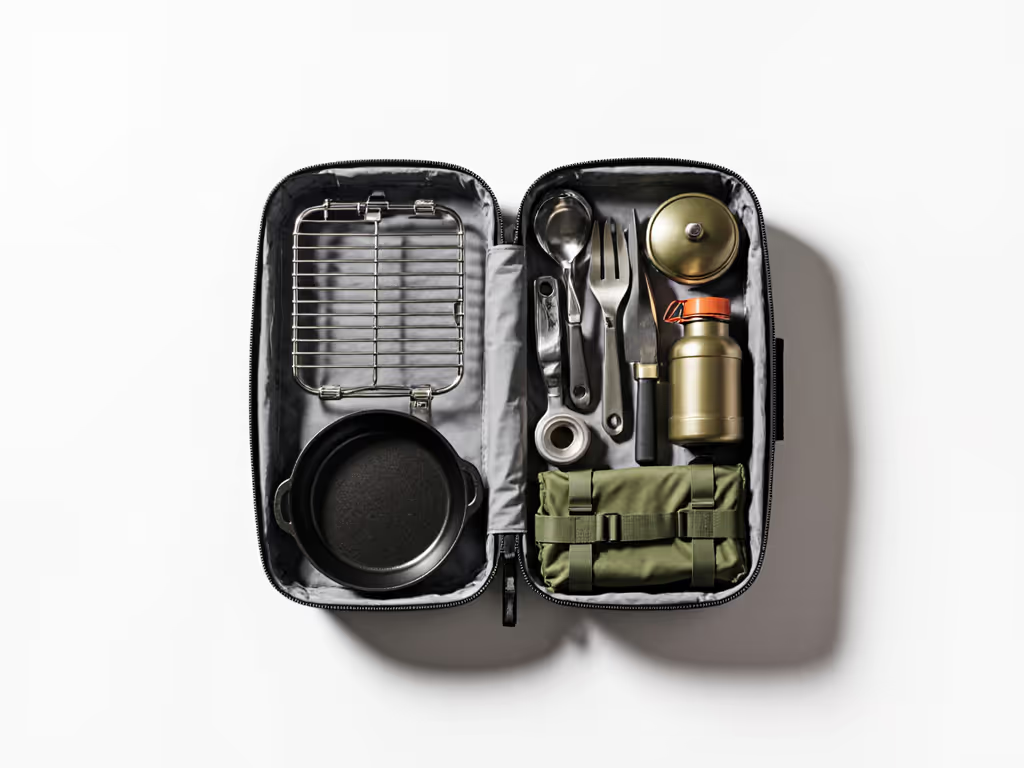
Source a compact grill and one fuel type matching your travel mode (backpack = butane; car/RV = propane). Grab a lightweight skillet and container. Test one egg method at home, then take the kit on your next outing (even a park breakfast). Practice under low stakes so your first real trip is a refinement, not troubleshooting.
The best grill is the one you'll actually carry and fuel anywhere.
Make that yours.