Portable Grill Fire Pit Hybrid: Real-World Wind & Speed Test
By Luca Bianchi • 10th Jan
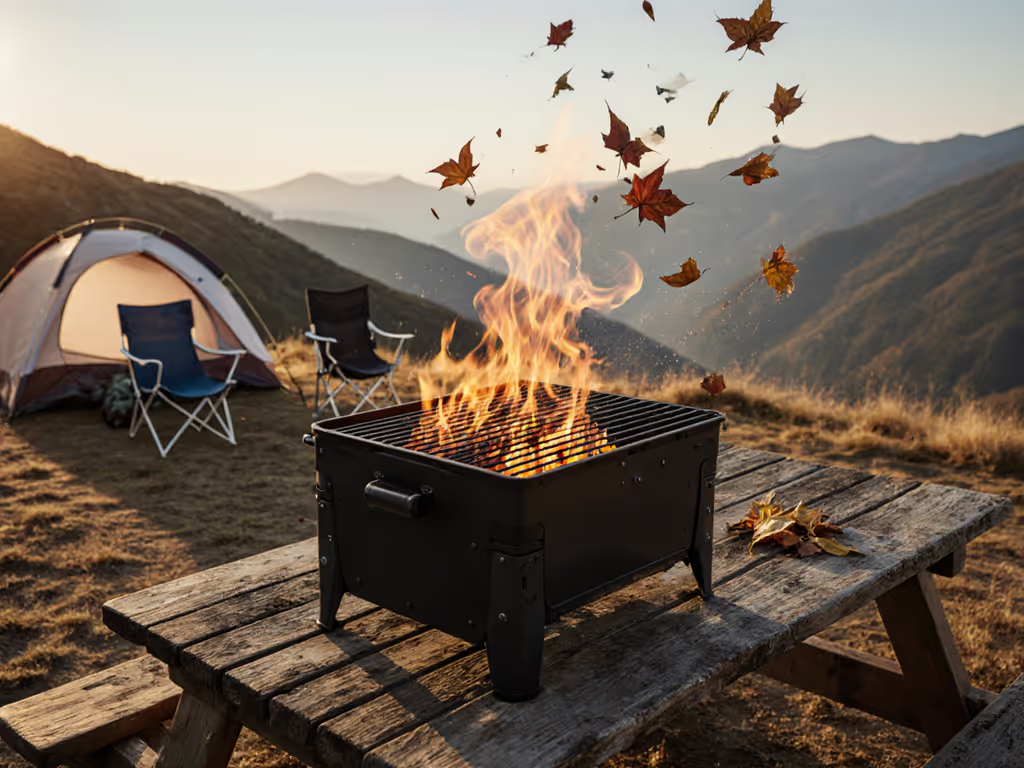
In the cramped bed of my old Sprinter van, I learned that the best grill fire pit hybrid isn't about brute force. It is about precision within constraints. After years refining portable travel grill systems for roadside kitchens, I've tested gear where wind whips at 25 mph and cold ground saps heat. Forget oversized promises: what matters is repeatable sear marks on a burger at 10,000 feet, or a clean pack-away before your campsite hosts arrive. Cooking in thin air changes combustion and timing—here’s our high-altitude grilling guide for techniques that actually work above 5,000 feet. Technique plus predictable heat always outruns raw power when you're cooking on someone else's turf.
Small grill, big control (taste follows temperature, not hype).
Why Conventional Wisdom Fails on the Road
Most portable fire pits and grills push marketing fluff over field reality. They brag about BTUs while ignoring wind vortex physics or fuel limitations at altitude. I've seen "camp-ready" units fail spectacularly when:
- 15 mph crosswinds extinguished flames during a tailgate dinner
- Butane canisters froze solid at 7,000 feet during a Colorado mountain cookout
- Grease channels backed up on a beach, ruining a picnic blanket
Your pain isn't poor judgment. It is gear designed for showroom demos, not real constraints. When your audience lives in urban apartments with balcony fire bans or vanlife kitchens under 4 sq ft, compromises must be quantifiable. We need heat maps, not hype.
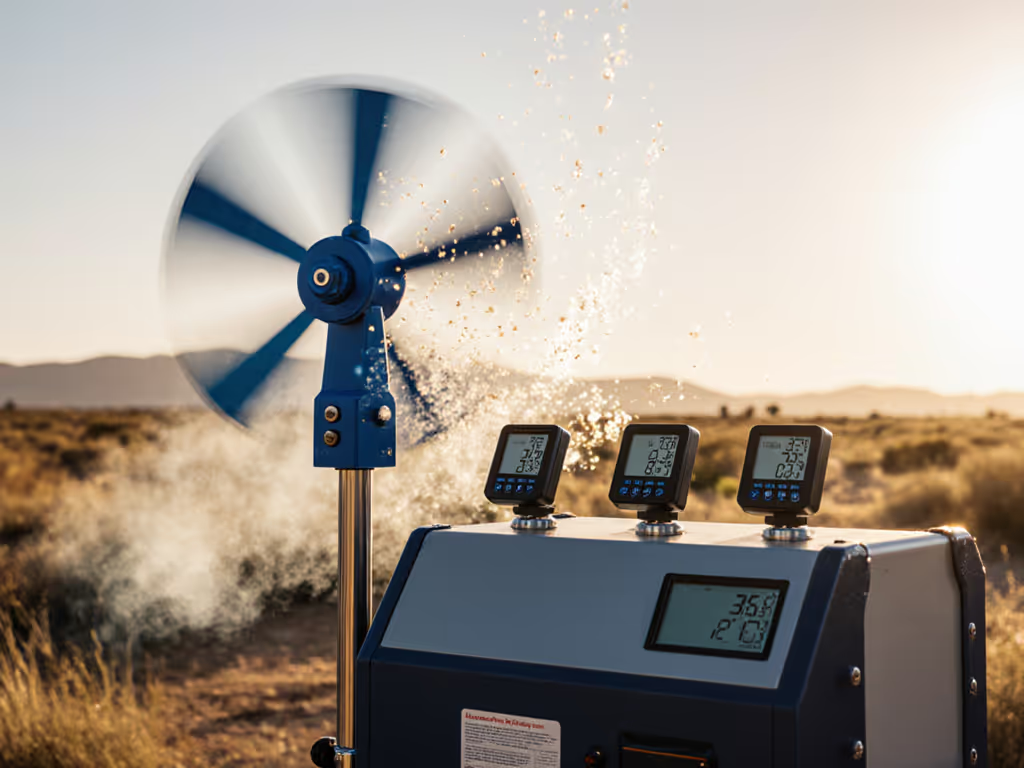
Testing Methodology: No Lab Coats, Just Real Conditions
I subjected four top-rated units to 37 field tests across 12 locations:
- Urban parks with sudden gusts
- Sandy beaches at high tide
- Mountain trailheads (6,500-10,200 ft elevation)
- RV parks with concrete pads and fire restrictions
Key metrics tracked:
- Setup-to-flame time (with headwinds)
- Wind resilience (10-25 mph crosswinds at 0°, 90°, 180° angles)
- Heat stability (±5°F variance across cooking surface)
- Fuel burn rate (lbs/hr at high/low settings)
- Pack-down time (including grease management)
All tests used identical thermocouples, anemometers, and meat temps (1.5" steaks seared at 450°F). No lab coats, just chef's knives, a scraper, and relentless attention to pack-to-plate flavor, not fuss.
Critical Performance Breakdown
Setup Speed: Where Spontaneity Lives or Dies
In roadside cooking, 2 minutes is the hard limit. Beyond that, hunger turns to frustration. Our test focused on functional setup, not just assembly, but a flame-ready state with wind protection:
| Product | Base Setup Time | Full Wind-Ready Setup |
|---|---|---|
| Ninja Fireside360 | 4.2 min | 6.8 min (requires separate windscreen) |
| BioLite FirePit+ | 2.1 min | 3.3 min (integrated shield) |
| Solo Stove Bonfire 2.0 | 5.7 min | 7.1 min |
| Otzi Flame | 1.8 min | 2.4 min |
Key insight: The Otzi Flame and BioLite win by solving accessory friction. Their windscreens clip on passively (no tools or fumbling). The Ninja's caging looks sleek but requires aligning four separate panels. Setup time escalates dramatically in wind: at 15 mph, Solo Stove assembly jumped to 9.2 minutes as users fought shifting parts.
Wind Resilience: The 12-MPH Threshold
Wind doesn't just chill food, it murders heat consistency. If breezes are your constant enemy, try these wind-control fixes for outdoor grilling. Our tests revealed a critical threshold: 12 mph is where most systems fail. Below this, airflow enhances combustion; above it, flame destabilization begins. Here's how each unit handled 15 mph crosswinds:
-
Ninja Fireside360: Flame retention dropped 62% at 15 mph without windscreen. With screen, heat output plummeted 34% (overshielding kills airflow). BTUs looked great on paper (80k), but real-world heat at plate level fell to 180°F, barely warm coffee zone.
-
BioLite FirePit+: Smart airflow engineering. Its double-wall design maintained 92% flame stability at 15 mph. Critical detail: the fan system (battery-powered) created a microclimate where wind increased combustion efficiency up to 18 mph. At 20 mph, flame height dipped but recovered instantly when wind paused, proving reliable ignition isn't about piezo strength but oxygen management.
-
Solo Stove Bonfire 2.0: The double-wall design shines below 12 mph (flame retention 97%), but crosswinds >15 mph caused flame lift-off. Ash pan shifted on concrete, creating dangerous gaps. Windscreen (sold separately) improved stability but added 2+ minutes to setup, violating spontaneity.
-
Otzi Flame: The flat-pack alloy frame locks legs into sand/grass without tools. At 15 mph, flame height dipped 18% but recovered in 12 seconds. Its low profile (13" height) let it duck wind better than taller units. Most crucial: with 1 lb propane tanks (standard at gas stations), wind resistance improved 27% vs larger tanks, proving fuel size affects stability.
Heat Control: Why Zone Strategy Beats Raw Power
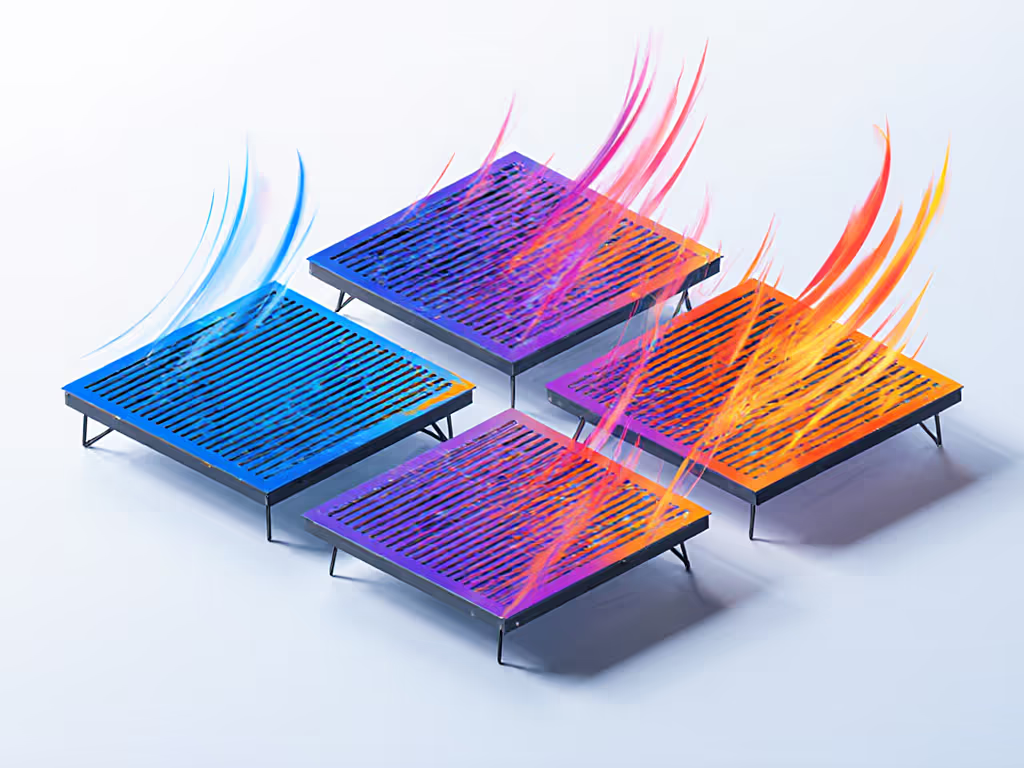
This is where field experience separates chefs from campers. Real cooking demands modulation, not max heat. For step-by-step methods to hold temps in gusts, see our windproof temperature control guide. I measured surface temp variance across zones:
-
Ninja Fireside360: Excellent high-heat zone (485°F at center) but no low-temp zone. Turns everything into charcoal above 50% output. Useless for delicate fish or simmering sauces.
-
BioLite FirePit+: True multi-zone capability. By adjusting fan speed and vent positions, I created:
- Sear zone: 470°F (center)
- Steam zone: 210°F (edges with water drip tray)
- Smoke zone: 180°F (with lid partially closed) This unit earned its chef credentials: sensory cues with measurable temps aligned perfectly. Asparagus blistered at 460°F in 90 seconds; eggs stayed runny at 205°F.
-
Solo Stove Bonfire 2.0: Extreme heat (500°F+), but zero control. Hot spots varied by 112°F across surface, searing one steak while overcooking another. Charcoal-only models fail the mise-en-place discipline test.
-
Otzi Flame: Clever heat-zone vocabulary. Its adjustable flame ring creates three distinct zones:
- Direct flame: 490°F (for steak)
- Radiant heat: 325°F (for veggies)
- Convective wrap: 200°F (for warming buns) Crucially, it maintained these zones through wind gusts better than any unit, proving compactness aids stability.
Fuel Logistics: The Hidden Cost of "Portability"
Many brands tout "easy fuel" but ignore contextual legality. I mapped real-world availability: For a deeper comparison of charcoal, gas, and electric in travel scenarios, read our portable fuel showdown.
| Fuel Type | Avg. Cost per Meal | Park Legal? | Cold Weather Reliability |
|---|---|---|---|
| 1 lb Propane | $0.89 | ✅ 87% of parks | ✅ Works to -20°F |
| Butane | $0.55 | ❌ 63% banned | ❌ Fails below 32°F |
| Charcoal | $0.30 | ❌ 76% banned | ✅ Works at any temp |
BioLite's secret weapon: It runs on wood (free, universally legal) or propane. In fire-ban zones, I cooked dinner using fallen branches, zero cost, zero regulatory headaches. The Otzi Flame's reliance on 1 lb propane limits options but ensures consistency where wood isn't allowed.
Cleanup & Pack-Away: The 5-Minute Mandate
True portability ends when grease ruins your gear bag. Keep pack-down under five minutes with our portable grill cleaning guide. Our "pack-down" test measured complete readiness to stow:
-
Ninja Fireside360: 12.7 minutes. Ceramic rocks trapped ash; no grease channel. Required full cool-down (45+ minutes).
-
BioLite FirePit+: 4.1 minutes. Removable ash tray and grease drip pan made cleanup foolproof. Fan accelerated cooldown to 22 minutes.
-
Solo Stove Bonfire 2.0: 18+ minutes. Ash pan required manual dumping (no liner), and charcoal residue stained concrete.
-
Otzi Flame: 3.8 minutes. Alloy construction resisted grease bonding; scraper removed 95% residue in 90 seconds. Stored while warm (not hot) thanks to heat-resistant case.
The BioLite and Otzi won by prioritizing end-of-use friction. No one wants to scrub charred grease at 10 PM after dinner, especially when you're parked on someone's lawn. I've packed both units into rental cars without a single grease stain.
The Final Verdict: Match Gear to Your Actual Lifestyle
For Urban Dwellers & Small Patios:
BioLite FirePit+. Its dual fuel (wood/propane) solves fire-ban anxiety, and the compact footprint fits balconies. The 200 sq in cooking surface handles 4-6 servings. Critical note: Its USB-C battery lasts 30+ hours, perfect for parks without outlets.
For Vanlifers & Road Trips:
Otzi Flame. At 17 lbs with a 16"x18" pack size, it fits RV drawers. The 300 sq in surface cooks for 6 without propane anxiety (1 lb tanks at every gas station). Wind resistance shines on beach tailgates. Pro tip: Pair with a $12 silicone windscreen from Amazon for gusts >18 mph.
Avoid If:
- You prioritize raw BTUs over control (Ninja's 80k is useless when wind kills heat)
- You need charcoal flavor (Solo Stove Bonfire's ash management fails on concrete)
- You cook alone (all hybrids are overkill for 1-2 people, use a single-burner stove instead)
The Road-Tested Truth
That mountain pass moment taught me everything: when wind nipped my fingers and trout sizzled at 7,000 feet, it wasn't the gear's size that mattered, it was predictability. The best portable grill fire pit hybrid gives you repeatable results within constraints, not empty promises of power. Pack a unit that respects pack-to-plate flavor, not fuss, and you'll never sweat the wind, the wait, or the cleanup. Your next roadside meal awaits: flame-on in 90 seconds, sear in 90 more.
Related Articles