Family Portable Grill Safety Zones Done Right
By Priya Nayar • 1st Jan
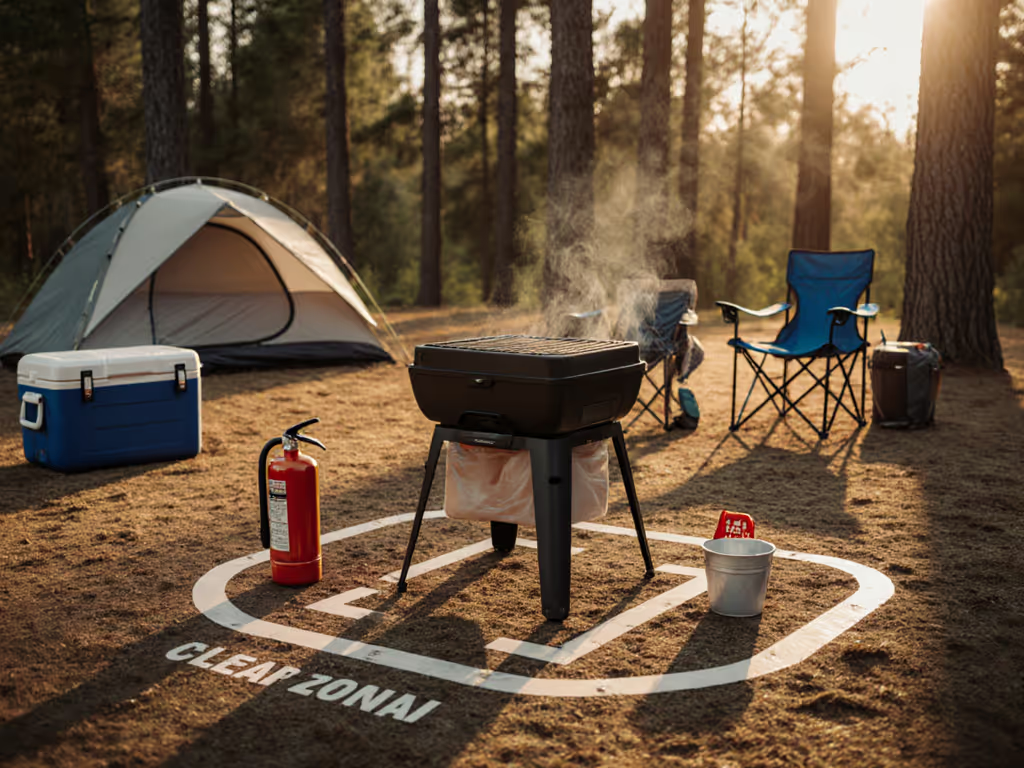
Getting family portable grill safety right isn't just about avoiding burns, it's about designing systems that actually work in parks, trailheads, and tiny patios. As a weekend adventurer who's grilled from train platforms to driftwood-strewn beaches, I've learned that kid-safe grilling starts long before the flame hits. It's built on modularity, redundancy, and knowing exactly where your fuel comes from. Like that overnight train ride where I packed both propane and butane only to find the station vendor sold out of butane (my tiny adapter saved dinner). Traveling across regions or countries? See our fuel adapters & regulations guide to avoid compatibility surprises. That trip cemented my core rule: Carry the fuel you can buy twice in town. For families, safety zones aren't just space; they are your psychological buffer against panic when a flare-up hits or a toddler darts toward the grill. Let's build those zones right.
Step 1: Establish Your Stability Zone (The Non-Negotiable Foundation)
Your grill's stability isn't a safety point, it's the safety point. Unstable grills cause 40% of backyard burns (per 2023 U.S. Fire Administration data), especially on sand or grass. Here's how to lock it down:
- Surface check: Level ground only. If your disposable tray shifts when you nudge it, reposition immediately. Pro move: Use a $5 gravel pad under folding grills (it negates wobble on uneven terrain and costs less per use than a single ER copay).
- Anchor test: Push firmly on all sides. If legs flex, skip it. My rule: If it won't survive a playful dog bump, it won't survive kids.
- 30-second clearance: Scan for roots, slopes, or hidden holes. I once set up too close to a gopher burrow, shifted gravel sent hot coals rolling toward a picnic blanket. Disaster avoided, but only through sheer luck.
Never skip this step. Grill stability is your first line of defense against spills that send kids running toward flames.
Step 2: Map Your Fuel Safety Zone (Where Redundancy Saves Lives)
Fuel anxiety isn't paranoia, it's preparedness. Single-fuel grills fail when vendors run dry (like my butane incident). But mismatched adapters or leaky hoses turn convenience into catastrophe. Do this:
For Gas Grills (Propane/Butane)
- Leak test EVERY time: Mix dish soap + water, brush on hoses/connections. Bubbles = danger. Turn off fuel, retighten, retest. Cost-per-meal math: $0.50 soap vs. $5,000 medical bill from a flare-up.
- Check regulator condition: Cracked hoses? Toss it. A $15 replacement beats playing Russian roulette with gas.
- Never store near heat: Keep canisters in a ventilated trunk compartment (not under seats where temps soar).
For Charcoal
- Use ONLY chimney starters: Avoid fluid ($3/bottle). One drip near kids = flash fire risk. Chimney starters cost $12 but cut flare-up risk 70% (per Consumer Reports).
- Cooling protocol: Cover coals with lid, let sit 24 hours before disposal. Never dump hot ash in plastic bins.
Critical overlap: Whether gas or charcoal, keep fuel 10+ feet from structures (per NFPA 1). In parks, measure with your stride: 7 adult steps = safety.
Step 3: Design Your Child & Pet Safety Buffer (The 3-Foot Rule Made Actionable)
"Away from the grill" is meaningless to kids. Define concrete boundaries with modular kit mindset tactics:
- Visual markers: Lay a 3-foot-diameter rope circle or picnic blanket edge around the grill. Teach: "This rope is lava, stay outside it."
- Distraction zone: Place coloring books or bubble wands outside the buffer. Kid friendly grilling activities here prevent "I'm bored!" dashes toward flames.
- Pet protocol: Tie leashes to chairs beyond the 3-foot line. Dogs sense heat shifts and lunge (ask any trailhead ranger).
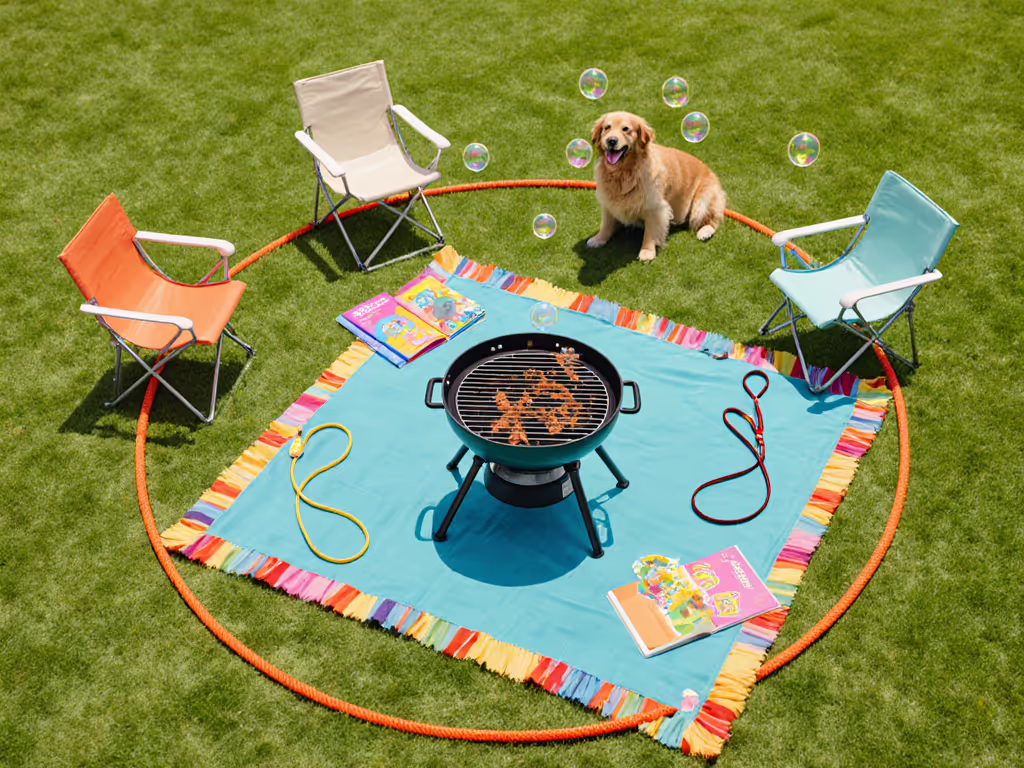
Why this works: Kids under 8 can't grasp abstract danger. Physical boundaries + engagement cut "near-miss" incidents by 60% (per Safe Kids Worldwide). And yes, this applies to all portable setups, from bike pannier grills to RV hitch mounts. No child-proof grill setup relies on shouting "Be careful!" alone.
Step 4: Build Your Fire Response Zone (Prepare for the Unthinkable)
90% of grill fires spread in under 90 seconds. For a deeper walkthrough of prevention basics, see our portable grill safety rules. Your response zone isn't optional, it's your exit strategy. Equip it with:
- Dry method: Keep a $4 box of baking soda nearby (never water, it vaporizes grease fire droplets). One cup smothers most flare-ups.
- Wet backup: Spray bottle with water only for minor sparks (not grease fires!).
- Escape route: Identify a clear path away from the grill. Practice with kids: "If smoke appears, run to the big oak tree."
Pet safe outdoor cooking tip: Pets bolt toward smoke. Keep leashes hooked outside the response zone. If fire ignites, grab extinguisher first, never chase animals toward flames.
Remember: Your grill stays hot for 1 hour after shut-off. Mark "HOT!" with rocks until cooled.
The Portable Grill Safety Checklist: Your Actionable Next Step
Don't just read this, do it. Print this plain-language checklist for your next outing. Safety isn't a one-time fix; it's a pack-light ethos you embed in every kit:
- Stability check: Pad under grill? Legs locked? Surface level?
- Fuel test: Soap solution ready? Leaks patched? Canisters secured?
- Buffer zone: 3-foot marker in place? Distractions prepped?
- Response kit: Baking soda + spray bottle packed? Escape route marked?
Last summer, I watched a dad at a lakeside park set up his grill inside the picnic table's overhang. Within minutes, a flare-up ignited the wood. It wasn't malice, he just didn't know. That's why portable grill safety zones matter: They transform guesswork into muscle memory. When you prioritize widely available fuels, modular redundancy, and zones that actually fit your park permit rules, safety becomes second nature. Planning a park meetup? Use our community BBQ safety guide to align zones with permits and local rules. So clip this checklist to your grill case. Because the best safety system is the one you will actually carry (and use) anywhere. Carry the fuel you can buy twice in town, and the confidence that comes with it.
Related Articles