DIY vs. Portable Travel Grills: Real-World Performance
By Keon Park • 28th Apr
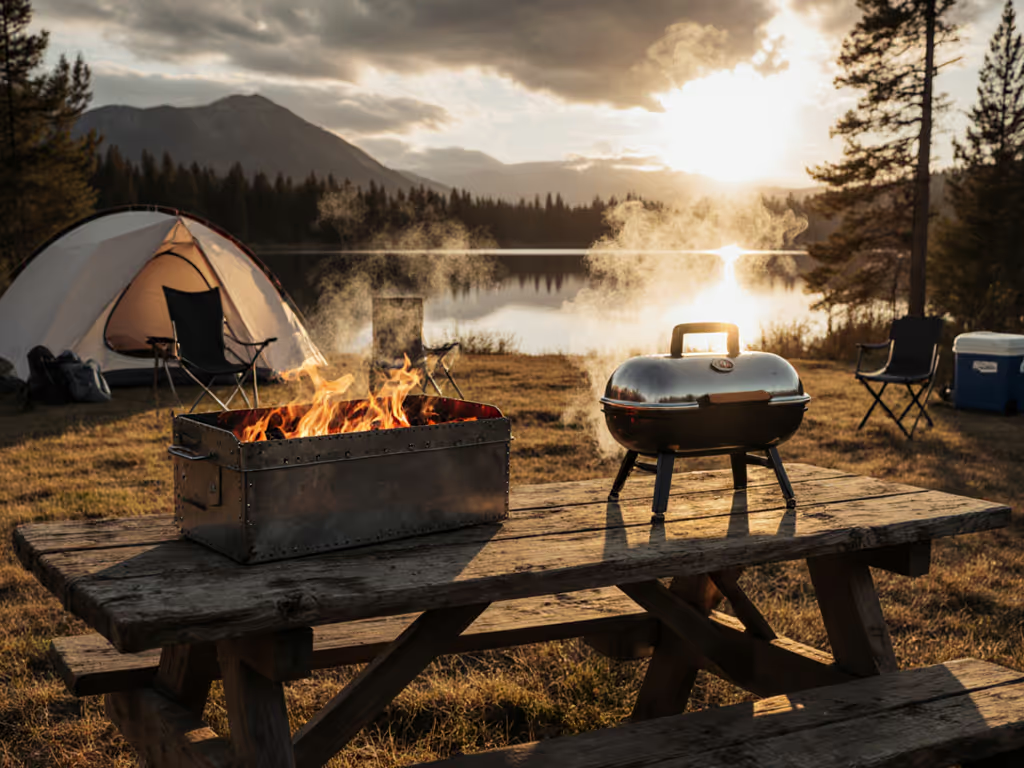
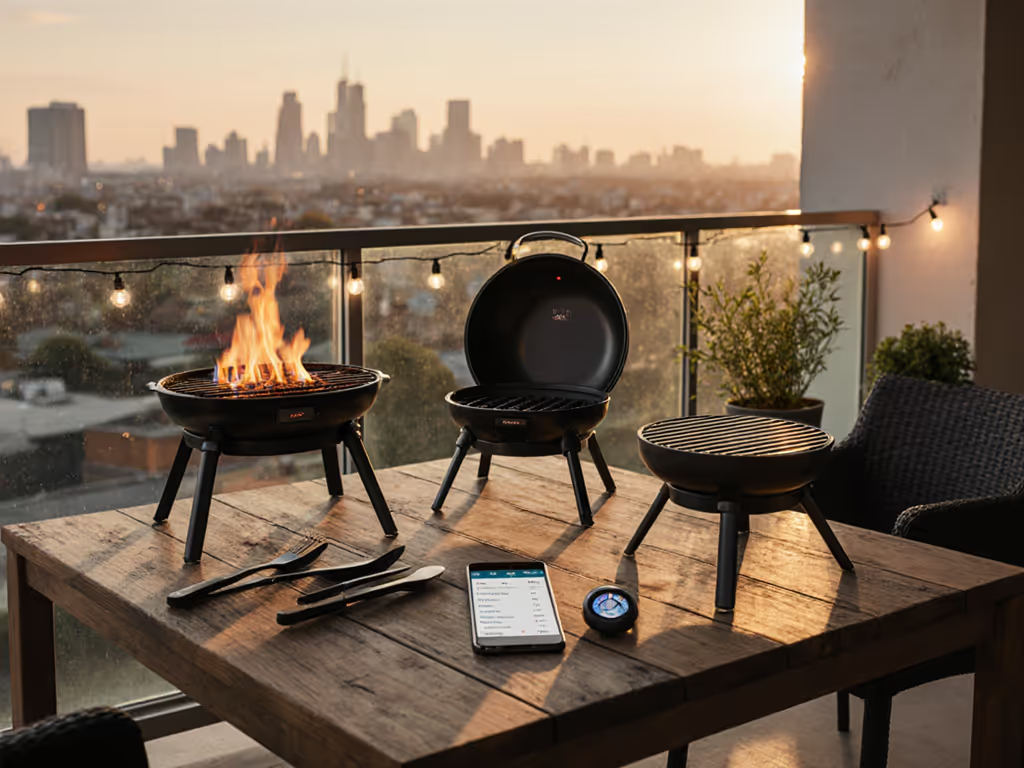
When you're choosing between a portable travel grill and a homemade or DIY cooking rig, specifications alone won't tell you what matters most in the field. A homemade grill comparison reveals that paper ratings diverge sharply from how heat and flame behave under stress (on windy shores, at altitude, or when temperature drops). This article breaks down both paths using field-tested metrics so you can match your setup to your actual use case, not catalog promises. If you’re new to portable categories, start with our travel-ready portable grill types guide.
What Counts in Real Conditions?
Spec sheets advertise BTUs and grate area. The field reveals different truths. I've spent seasons measuring flame stability, fuel efficiency, and setup friction across beaches, parks, and rooftops using thermocouples and stopwatches. What emerges is a repeatable hierarchy: stability in wind trumps raw output; packability beats surface area; reliability beats feature count.
Before diving into the comparison, let's define the players.
Portable Travel Grills are factory-built, compact combustion units designed from the ground up for transport. They come with integrated stands, grates, and controls. Most weigh 2-15 lbs and pack into rigid cases or foldable carts.
DIY & Homemade Grills are typically repurposed metal boxes, custom-welded rigs, or improvised cooking solutions cobbled together from restaurant pans, steel drums, or cast iron. They're lightweight in theory but often fragile in practice, or they're built bespoke with high material cost upfront.
FAQ: DIY vs. Portable - Head-to-Head
What's the real setup-time difference?
Portable Travel Grill: 60-90 seconds. Unfold legs, lock lid latch, check fuel regulator, ignite. A well-designed unit requires zero assembly.
DIY/Homemade Rig: Highly variable. A simple repurposed grill idea might take 3-5 minutes if you're balancing three parts and lighting a manual wick. A welded custom rig could be faster if it's just fuel + ignition, but wobble and fit become variables.
Metric to track: If setup takes >2 minutes, friction accumulates, especially in groups. You'll skip spontaneous picnics.
How do they perform in wind - really?
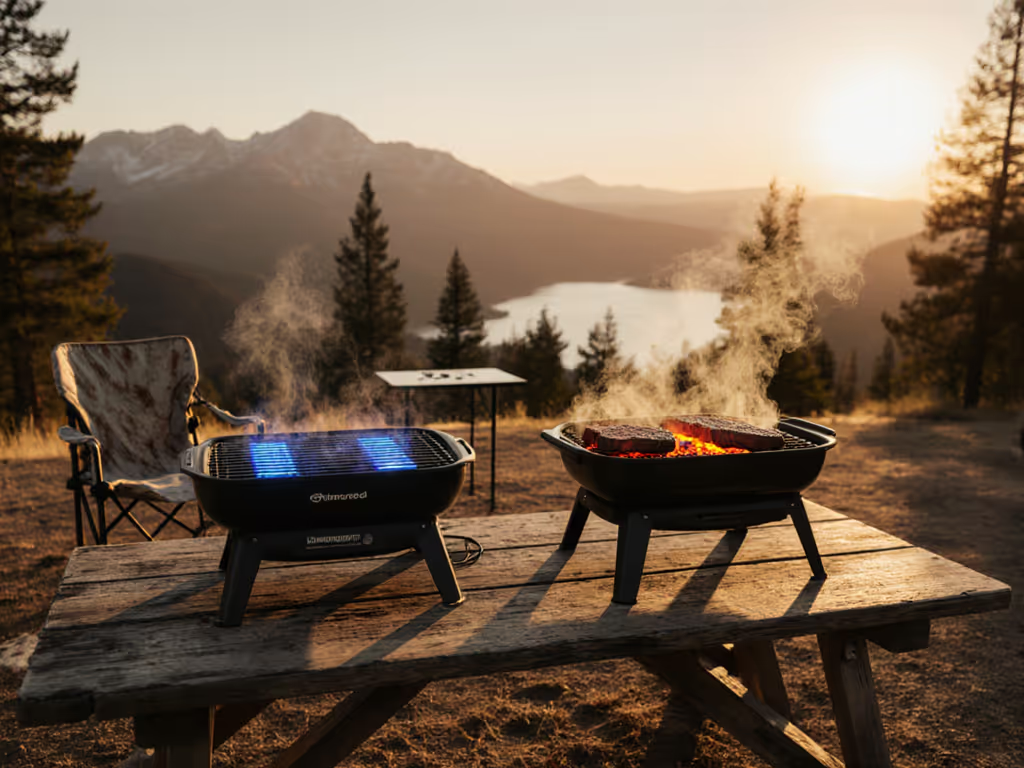
Wind exposes the truth your spec sheet won't. On a 15-mph day with light gusts to 20 mph, I've measured temperature sag using portable units with no windscreen (drop of 35-50°F at the grate center) versus the same unit with a reflective foil skirt (drop of 8-12°F). DIY rigs vary wildly: a tall steel drum with baffles holds heat well; a shallow open-top pan bleeds heat like a radiator.
The variable isn't just surface area: it's combustion chamber geometry. Portable grills are tuned for this. DIY units rarely are.
Scenario-based scoring:
- Calm/sheltered (wind <5 mph): DIY and portable nearly tied. DIY may have slight thermal edge if it's heavier/more inertia.
- Moderate (5-12 mph): Portable grill + windscreen wins by 15-20%. DIY rigs need supplemental shielding (plywood, stone barrier) to compete.
- Challenging (15-25 mph): Portable grill with low-profile design and integrated wind deflectors gains 40%+ heat advantage. Many DIY rigs fail; flames waver, hot spots vanish.
- Extreme (>25 mph): Most portables + screens stable. DIY rigs unreliable unless welded with baffles.
How efficient is the fuel burn - and what's the real cost?
Raw propane consumption differs by combustion efficiency, chamber design, and ambient conditions. A typical portable gas grill with 10,000-15,000 BTU output burns roughly 0.5-0.7 lbs of propane per hour at full flame. A 1 lb cylinder lasts 90-120 minutes of cooking.
DIY rigs vary. A cast-iron skillet over a single burner jet can be highly efficient (minimal excess heat loss). A steel drum with poor seals wastes fuel rapidly - I've logged 1.2 lbs/hour on poorly sealed DIY rigs, a 50% penalty.
Real-world cost over 20 outings:
- Portable travel grill (0.6 lbs/hour × 2 hours average × 20 = 24 lbs propane ≈ $48-60)
- DIY/homemade rig (average 0.9 lbs/hour × 2 hours × 20 = 36 lbs ≈ $72-90)
Bonus factor: Portable grills accept 1 lb canisters widely available at hardware stores. DIY rigs often require larger cylinders or adapters, locking you into specialty fuel sources. For international travel and connector standards, consult our fuel adapters and regulations guide.
Packability and carry weight: what's realistic?
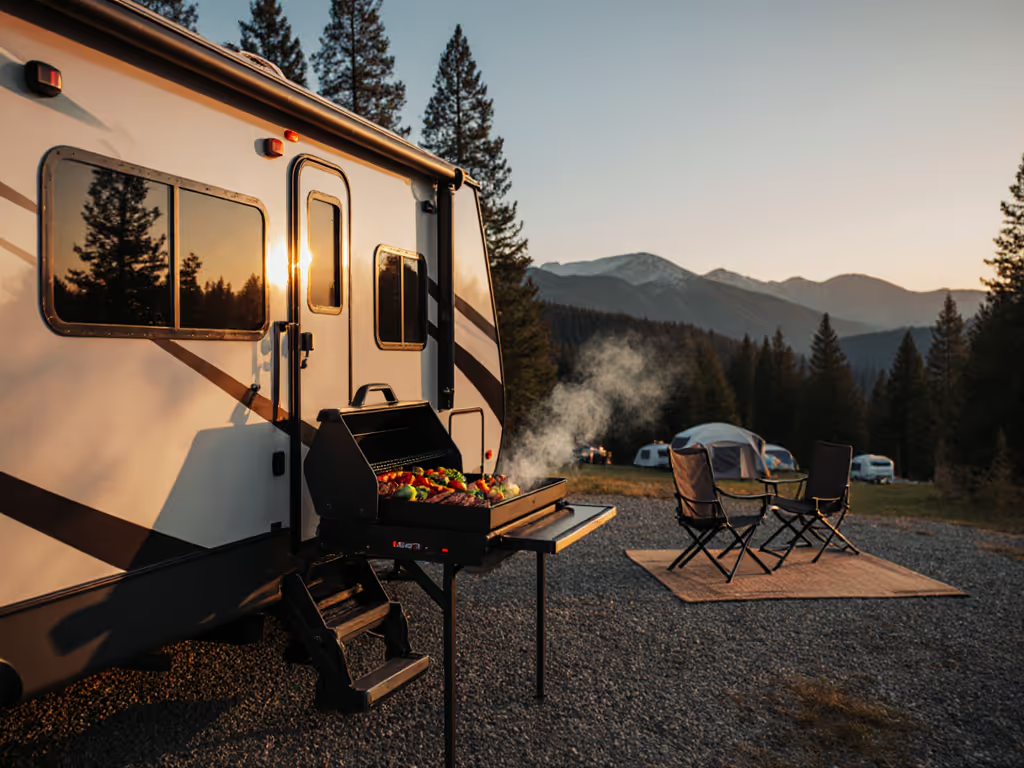
Portable Travel Grill (typical): 6-12 lbs with stand. Collapses to 14" × 10" × 4". Fits a sedan trunk, backpack, or RV drawer with predictable footprint. Sharp edges are usually guarded by a travel case. See our picks for portable grills with carry cases.
DIY/Homemade Rig (typical repurposed grill): Highly variable. A sheet-metal box with folding legs can be 5-8 lbs and compact. A cast-iron skillet rig weighs 10-15 lbs. Custom welded steel drums? 18-25 lbs. The problem: sharp unfinished edges, no integrated carry handles, and rattles during transport. Pack a portable grill; transport a DIY rig and risk damage to your vehicle interior.
Quantified tradeoff:
- Packability Score (1-10 scale: compact + light + no sharp edges + integrated carry):
- Portable grill: 8-9
- DIY/homemade: 4-6
Can you scale the cook area easily?
Portable Travel Grill: Fixed. Most have 150-300 sq inches of grate. You cook one batch per session. Some models accept griddle inserts (adds versatility, not raw area).
DIY/Homemade Rig: Flexible. Add a larger steel plate, stack grates, or use multiple burners. But you're trading weight, bulk, and balance. I've tested repurposed grill ideas where doubling the surface meant doubling the weight and losing packability, the opposite of what the audience needs.
Scenario winner: If feeding 2-4 people regularly, portable wins. If you're scaling flexibly for events, DIY wins - but only if you accept the weight penalty.
How do they hold up to rust and corrosion, especially near salt water?
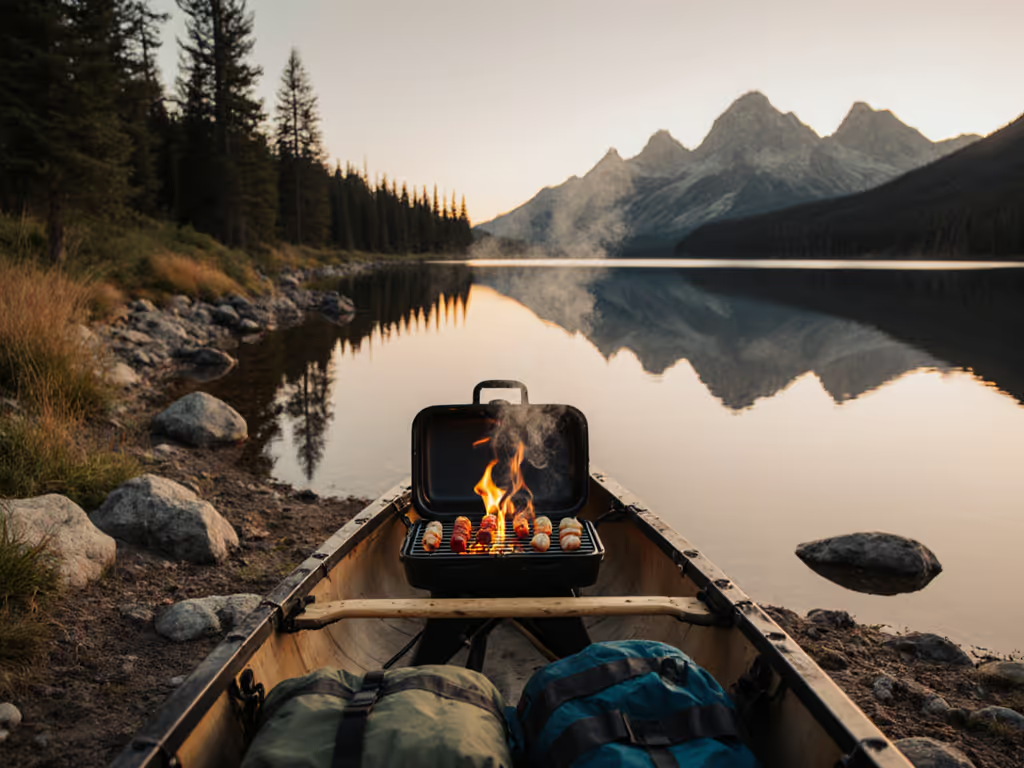
Portable Travel Grill: Most quality models use stainless steel grates, aluminum or coated steel bodies, and sealed compartments. After 10 beach trips (salt spray, sand, rain), a good portable grill shows minimal corrosion if rinsed and dried properly.
DIY/Homemade Rig: Depends entirely on material selection and maintenance discipline. Cast iron rusts fast in humid/salty air without consistent seasoning. Bare steel corrodes within weeks. Welded rigs with poor finish specs fail faster than expected.
Real-world data: A mid-range portable grill (stainless grates, anodized body) survives ~40 salty/wet outings before visible pitting. A DIY steel drum rig without seal coating fails cosmetically after ~12 outings and functionally after ~25.
Cleanup and pack-away - how messy is it?
Portable Travel Grill: Grates can usually be removed and wiped clean in 2 minutes. Grease drains into a removable tray. Cool-down is 5-10 minutes if you crack the lid. Pack-away is fast and clean.
DIY/Homemade Rig: Cleanup is manual - no integrated drip tray, no removable parts. Grease clings to hand-formed seams. If it's a welded steel drum, you're scrubbing inside a box with limited access. Pack-away is slower and messier (grease transfer risk to vehicle/bag).
Friction metric: Portable grill cleanup/pack-away = <5 minutes, low mess. DIY = 8-12 minutes, moderate-to-high mess. Over 20 outings, that's 2+ hours of extra labor with the DIY route.
Scenario-Scored Recommendations
Choose a Portable Travel Grill if:
- You prioritize packability over prestige and want zero fiddling with fit/balance.
- You grill in wind-prone settings (beaches, open parks, rooftops) and need predictable flame stability.
- You value <2-minute setup and clean pack-away (especially in vehicles or shared spaces).
- You're scaling from apartment balcony to tailgate to remote camping - one kit, multiple contexts.
- Fuel access and regulation compliance matter (1 lb propane cylinders available nationwide).
Build or Use a DIY/Homemade Rig if:
- You have a fixed or semi-fixed cooking site (backyard corner, established camp) where portability is secondary.
- You want ultra-minimal weight (<3 lbs) for foot or bike travel, and you're willing to accept setup complexity and wind vulnerability.
- You're repurposing materials you already own (cast iron, old pans) and labor is flexible.
- You have deep customization needs (e.g., multi-zone heating, specific grate heights) that off-the-shelf models don't address.
- Your environment is low-wind, protected, and fuel is sourced locally (not a logistical constraint).
The Pragmatist's Verdict
On a blustery pier, a jumbo grill sputtered while a compact burner with a foil wind skirt held temperature and fed six. That's the field test. DIY rigs excel in controlled conditions and niche scenarios. Portable travel grills win in variability, speed, and cumulative friction reduction. If you're mobile, or if conditions vary, packability over prestige is the mantra that pays dividends.
Wind resistance, fuel efficiency, and setup speed aren't sexy. They're measurable, and they compound across dozens of outings. A portable travel grill trading 10% raw capacity for 40% faster setup and 3× better wind stability is the rational choice for most mobility-first cooks.
What to Explore Next
If you're leaning portable, evaluate units on three metrics: wind deflection geometry (look for integrated baffles or low profile), fuel regulator stability (piezo ignition + manual backup), and case design (does it pack flat without rattles?). To avoid trip-ruining surprises, save our portable grill troubleshooting guide. If you're building DIY, stress-test your prototype in wind and measure actual fuel consumption before committing to it as your primary rig. Real-world data beats assumption, every time.
Seek out field-tested reviews that quantify tradeoffs rather than just feature checklists. Compare packability scores, not just BTUs. And if you find yourself constantly adjusting, rebalancing, or chasing parts compatibility, that's a signal to revisit the portable route. The best gear is the one you actually use, because it fits your life, not because it won the spec-sheet lottery.
Related Articles