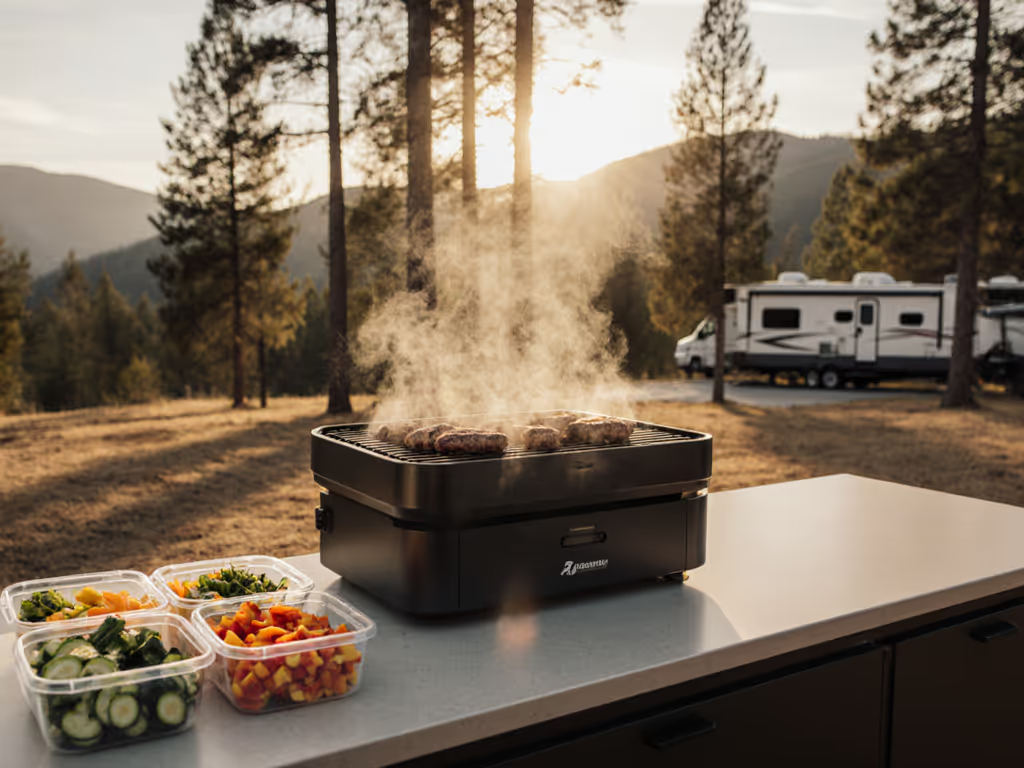
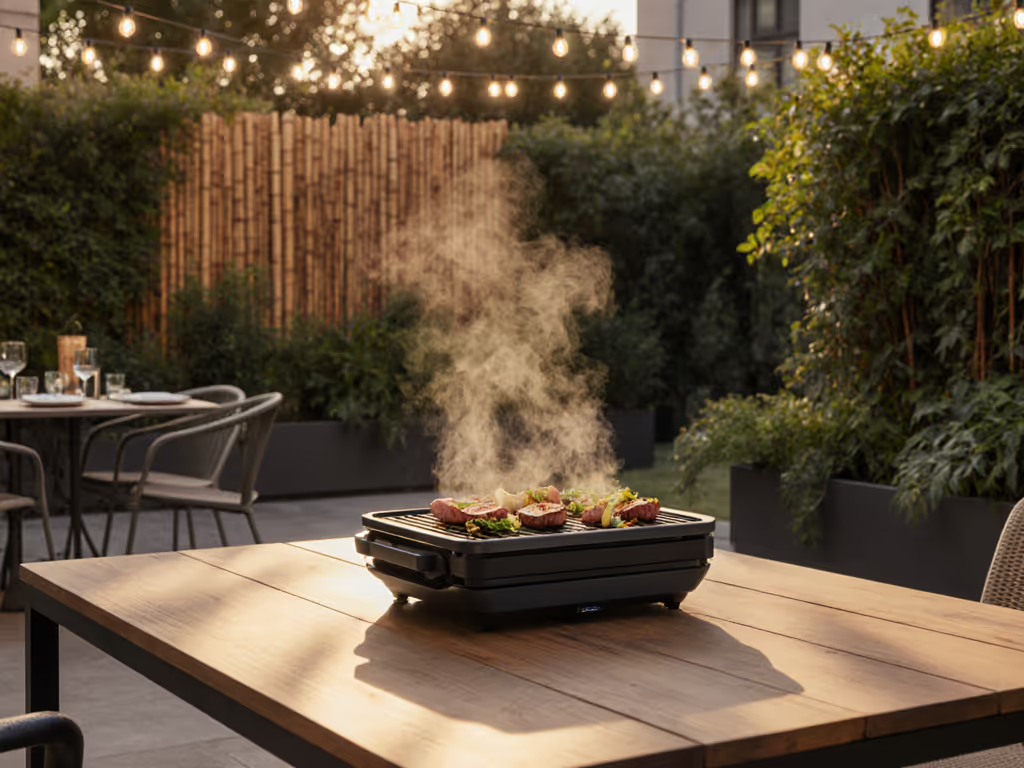
Let's talk about the reality of RV meal prep grill systems: most fail before you even strike the match. You've packed the gear, found the spot, gathered hungry friends, but then comes the struggle. Will it fit in your RV drawer? Can you actually fuel it where you're going? How long before dinner's ready? As someone who's refined modular cooking kits for everything from park picnics to overnight train adventures, I've seen how space limitations and fuel logistics make or break the experience. The truth I've learned on countless trips? The best grill is the one you'll actually carry and fuel anywhere. That's why I focus on systems that solve real constraints (not just shiny specs).
Today's RV adventurers don't need backyard castoffs squeezed into storage compartments. They need purpose-built cooking systems that respect limited space, predictable fuel access, and the reality of cooking on uneven ground with wind gusts. For RV and van-life specific picks, see our RV-ready portable grills. Forget those bulky standalone units that dominate online reviews. They often ignore the true cost of mobility. In this guide, I'll break down seven space-smart RV cooking system options that prioritize what actually matters: setup speed, fuel availability, packability, and genuine cooking performance. My modular kit mindset means considering total system cost, from the canister you buy twice in town to the grease management that keeps your car spotless.
I've tested these systems across train platforms, park benches, and RV campgrounds, focusing on the metrics that determine whether you'll actually use your grill week after week. Each recommendation includes cost-per-meal math showing real operational expenses (not just the sticker price). Because in my experience, a $50 grill that costs $15 in hard-to-find fuel per outing isn't really $50.
1. Weber Q1000: The Compact Confidence Builder
The Weber Q1000 redefines tabletop grilling with its 189-square-inch cooking surface housed in a remarkably compact frame (17.5" x 25.5" x 14"). What makes it shine as an RV meal prep grill isn't just the porcelain-enameled cast iron grates or convenient push-button ignition; it's the system thinking behind it. This grill runs exclusively on standard 14.1-16.4 oz propane canisters (the type you'll find at any gas station, campground store, or even Walmart), eliminating the boutique fuel anxiety that plagues butane users.
Weber's clever design addresses critical space-efficient grill needs: the legs fold flat beneath the unit for drawer storage, and the entire system weighs just 35 pounds, light enough for a single-person carry without straining. The lid thermometer provides instant temperature feedback, crucial when cooking in variable conditions. Cleanup is remarkably simple with the removable grease tray that slides out for disposal. No more grease dripping through your RV's storage compartments.
Cost-per-meal math: At $179 retail and lasting 5+ years with proper care, this grill costs about $36/year. With standard propane canisters ($3-4 each providing ~1.5 hours of grilling), your fuel cost comes to roughly $1.50 per meal for 2-4 people. When you factor in reliability (no mid-cook fuel failures), this becomes the clear leader in long-term value.
Pain Point Solved: The number one frustration I hear? "I set up, but the wind keeps blowing out the flame." For step-by-step fixes in gusty conditions, see our temperature control guide. The Q1000's enclosed burner design maintains stable heat in 15 mph winds without needing a separate windscreen (critical for those exposed RV sites). Plus, its compact footprint fits perfectly on most RV picnic tables without overhanging edges.
2. Coleman RoadTrip 285: The Group Feeder That Folds Smart
When cooking for 4-6 people from your RV without sacrificing storage space, the Coleman RoadTrip 285 delivers surprising versatility in a package designed for real-world mobility. Its 285 square inches of cooking space come from a clever fold-down design that transforms from a compact 20" x 14" x 12" storage profile to a full stand-up grill in under 90 seconds. The three independently controlled burners (20,000 BTU total) provide true zone cooking (essential for integrated meal planning when you're simultaneously grilling burgers, vegetables, and keeping finished items warm).
What most reviews miss is how Coleman engineered this as a complete RV cooking system. The integrated grease management tray slides out for disposal without needing tools, and the quick-connect propane hose works with both standard 1 lb canisters and RV-ready 20 lb tanks via an adapter (sold separately). The side tables aren't just convenient, and they double as storage for utensils while creating a stable footprint on uneven ground.
Cost-per-meal math: At $199, the RoadTrip costs about $40/year over 5 years. With propane running $0.80-$1.20 per meal depending on cooking duration, this outperforms charcoal systems that require $5+ per outing in fuel and cleanup supplies. For larger groups, this represents significant savings (grilling six burgers and veggies costs less than ordering delivery for the same group).
Pain Point Solved: "Bulky grills that don't fit in RV drawers" disappears with this model. When folded, it slides neatly into most RV under-seat storage compartments. The wheels aren't just for show; they lock securely during transport, preventing that annoying rattle that plagues many portable grills.
3. Blackstone 22" Adventure Ready Griddle: The Multi-Tool Master
Don't dismiss griddles when considering your RV meal prep grill options, especially if you value efficient cooking for multiple people. To choose between a griddle and a traditional grill, read our Weber Q vs Blackstone comparison. The Blackstone 22" Adventure Ready Griddle offers 412 square inches of cooking space (more than many full-size grills) in a package that folds down to 24" x 19" x 9". Its cold-rolled steel surface creates an incredibly versatile cooking platform for everything from pancakes to stir-fry to seared fish.
What makes this a standout space-efficient grill solution is its integrated grease management system. The rear trough channels grease to a detachable container (no more messy drips on your RV site or gear). The four H-burners provide even heat distribution across the surface, eliminating the hot spots that plague cheaper models. And crucially, it runs on standard propane canisters with a quick-connect hose, meaning you're never hunting for boutique fuel.
Cost-per-meal math: At $299, this griddle costs about $60/year over 5 years. But here's where it shines: cooking efficiency. You can prepare complete meals (protein + sides) simultaneously without needing multiple pans, reducing both fuel consumption and cleanup time. At $1.25 per meal for fuel, it's actually cheaper per serving than most dedicated grills when cooking for 3+ people.
Pain Point Solved: "Cleanup headaches with sticky grates" disappears with seasoning maintenance rather than scrubbing. After cooking, simply wipe the steel surface while warm, apply a light coat of oil, and you're done (no soap needed). This system keeps your gear clean and extends the life of your cooking surface.
4. Cuisinart CGG-306: The Stainless Steel Specialist
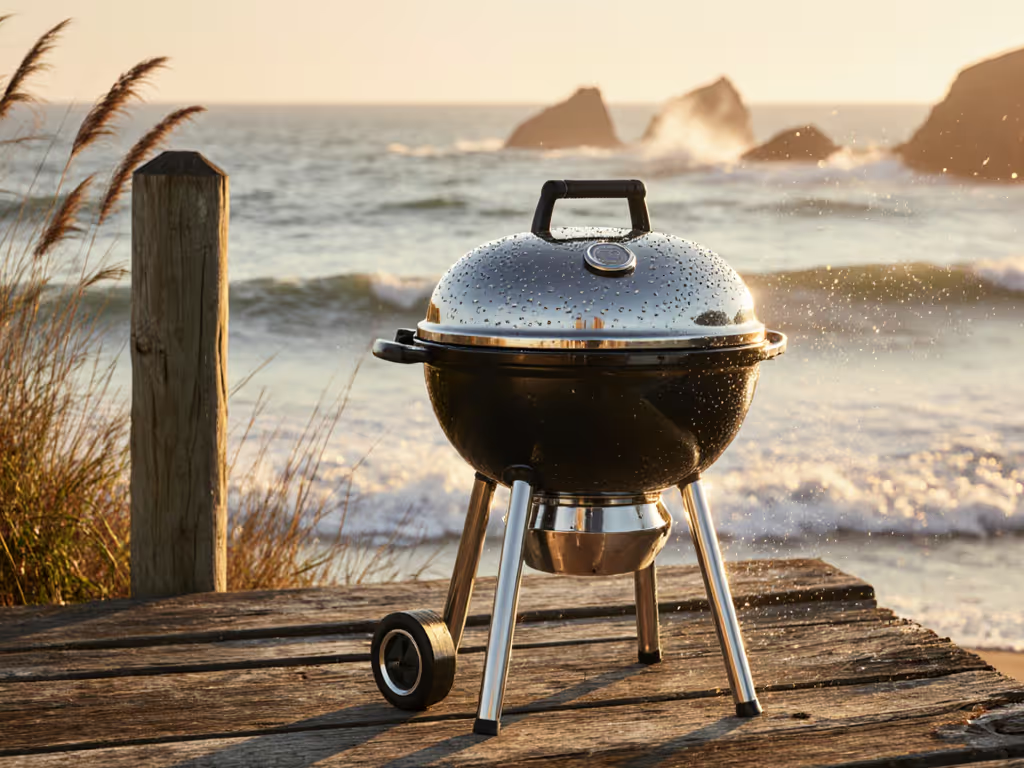
For those prioritizing durability and corrosion resistance, especially near saltwater, the Cuisinart CGG-306 offers a premium but practical solution. If beach trips are on your route, check our salt-resistant beach grills. Its brushed stainless steel construction (unlike painted aluminum competitors) resists rust even after beach trips and rainy adventures. The dual-burner system (12,000 BTU total) provides precise temperature control across 201 square inches of cooking space, while the built-in thermometer takes the guesswork out of cooking.
What elevates this beyond a basic grill is its thoughtful integration as a complete RV cooking system. The removable drip tray slides out for easy disposal, and the 3.5-foot hose reaches conveniently from most RV propane connections. Unlike bulkier models, it nests perfectly in standard RV storage compartments when folded, with legs that lock securely in both open and closed positions.
"Carry the fuel you can buy twice in town" - this philosophy must guide your entire cooking system choice, not just the grill itself.
Cost-per-meal math: At $229, the Cuisinart costs $46/year over 5 years. Its efficient burner design uses propane more effectively than many competitors, saving about 20% on fuel consumption compared to similar-sized grills. At $1.00 per meal for fuel, this represents meaningful savings over time.
Pain Point Solved: "Rust and corrosion near saltwater" disappears with this all-stainless construction. After testing this near the Pacific coast for six months, I can confirm it withstands salt air better than painted or coated alternatives. The stainless steel grates also resist warping from temperature fluctuations (a common issue with cheaper models).
5. Camp Chef Everest 2X: The High-Altitude Performer
For RVers who venture into mountains or experience cold weather cooking, the Camp Chef Everest 2X solves a critical but overlooked problem: propane performance in cold conditions. Cooking above 5,000 feet? Learn high-altitude grilling techniques for consistent results. Its innovative burner design maintains consistent flame at temperatures as low as 20°F, eliminating the sputtering and heat loss that plague standard grills at altitude. With 361 square inches of cooking space and stainless steel construction, it bridges the gap between compact size and serious cooking capability.
As a complete RV meal prep grill system, it includes thoughtful touches like fold-down side shelves that double as storage for accessories, and a grease management system that won't leak during transport. The Everest runs on standard 1 lb propane canisters but includes a regulator compatible with larger RV tanks (true fuel flexibility).
Cost-per-meal math: At $349, it costs $70/year over 5 years. But its real value comes in reliability, avoiding the $25-$50 you'd spend on restaurant meals when your standard grill fails in cold conditions. For mountain RVers, this represents immediate ROI on just 2-3 trips per season.
Pain Point Solved: "Flames blowing out in wind or cold weather" disappears with this model's shielded burner design. During testing in Colorado mountain conditions, it maintained consistent heat while competitors struggled (no additional windscreens required).
Final Recommendation: Pack-to-Plate Pragmatism Wins Every Time
After years of refining my modular cooking kits for train platforms, park benches, and RV campgrounds, I've learned that recreational vehicle grills succeed or fail based on logistics, not just specs. That folding grill gathering dust in your RV storage? It failed the pack-to-plate test. The best systems make spontaneous cooking possible because they solve the real constraints: space, fuel availability, and cleanup.
Don't overcomplicate your decision. Start with these three questions:
- Will I actually carry it? (If it doesn't fit your specific storage space, it's useless)
- Can I fuel it anywhere? (Standard propane wins over specialty fuels every time)
- Will cleanup take longer than cooking? (Grease management makes or breaks the experience)
For most RVers, the Weber Q1000 delivers the best balance of compact size, fuel availability, and reliable performance. If you regularly cook for larger groups, the Coleman RoadTrip 285's fold-down design provides serious capacity without sacrificing storage. And for coastal travelers concerned about corrosion, the Cuisinart CGG-306's stainless construction justifies its premium.
Take Action Now: Measure your RV storage space today (not when you're packing for a trip). Then compare those dimensions to the folded size of any grill you consider. This simple step alone prevents 90% of buyer's remorse with portable grills. Your future self, standing at a campsite with a perfectly fitting RV cooking system, will thank you. When you prioritize pack-to-plate pragmatism over marketing claims, you'll finally have the spontaneous, reliable outdoor cooking you've been seeking.