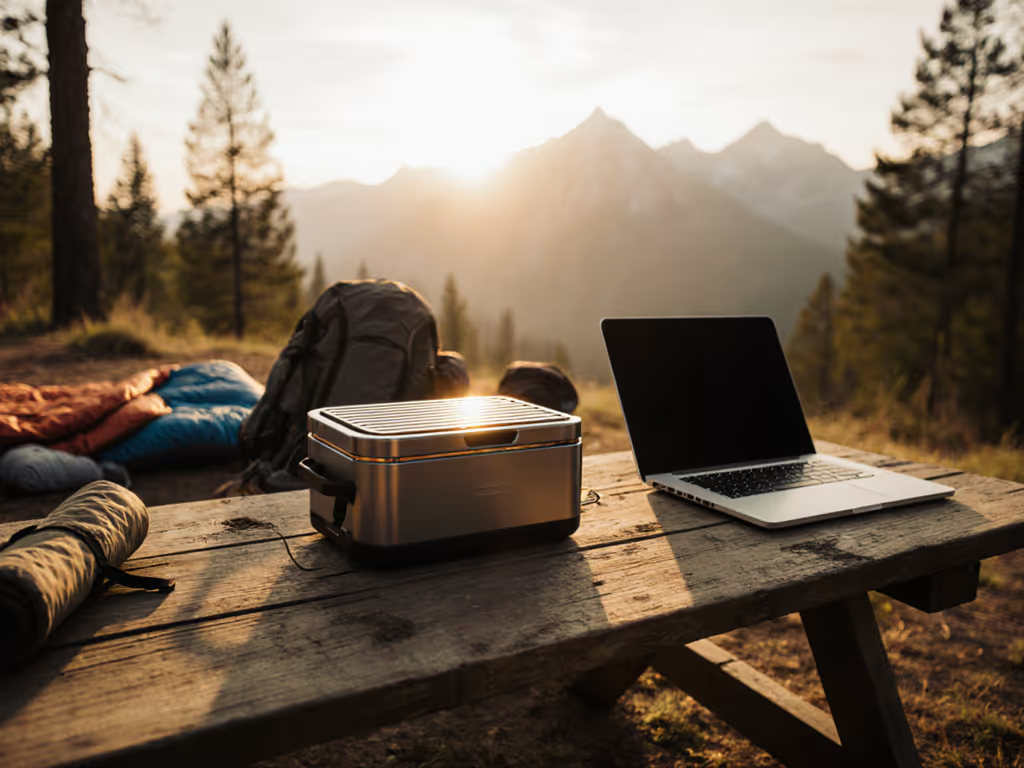
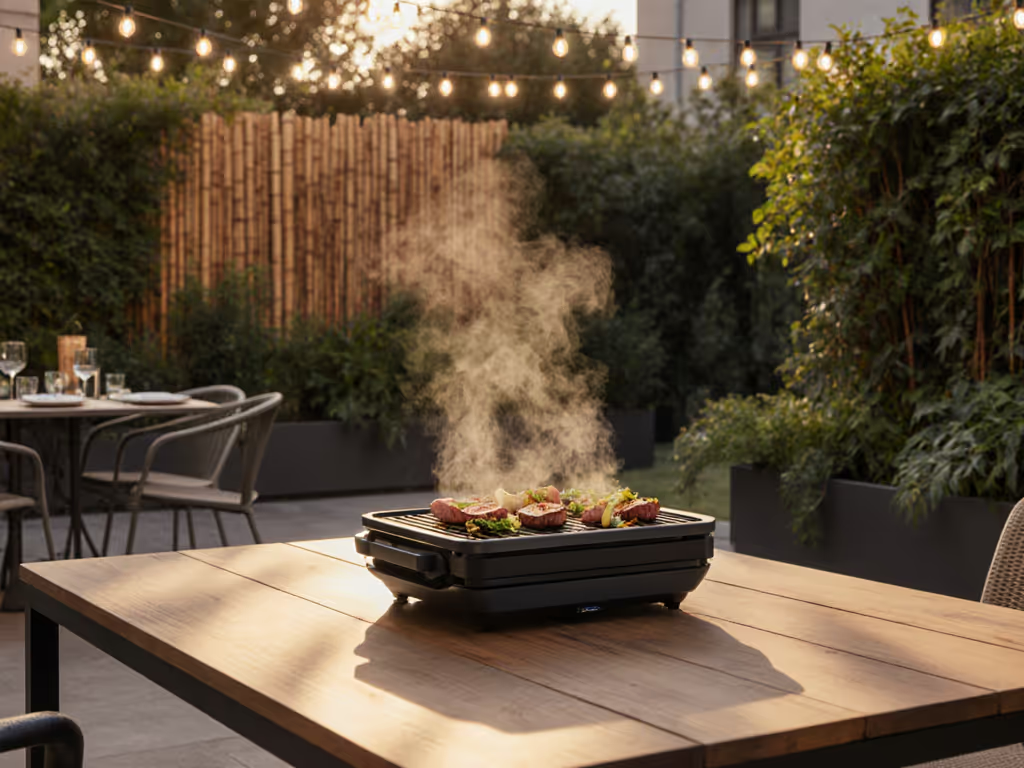
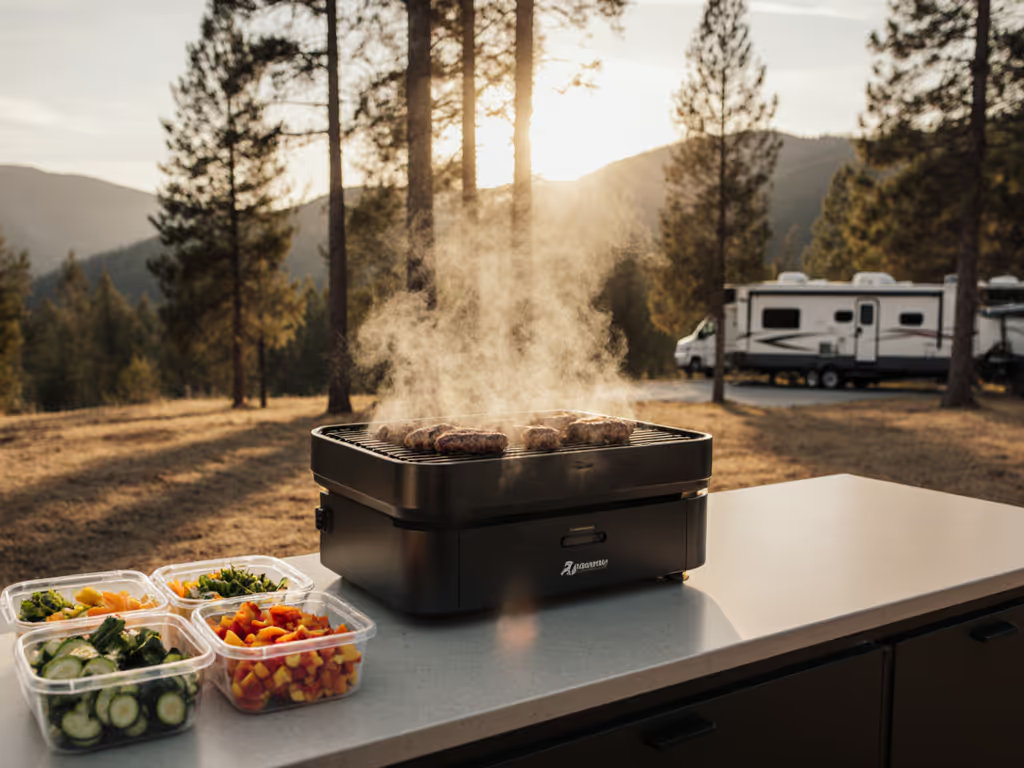
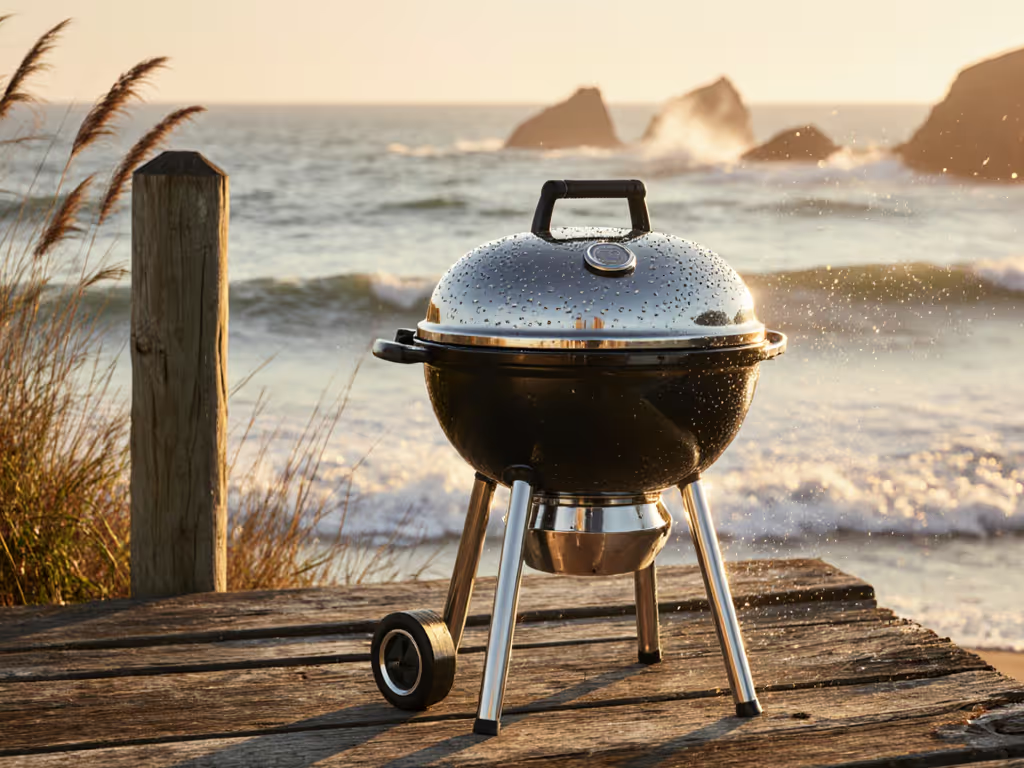
When you're cooking across continents, a portable travel grill isn't just gear, it's your permission slip to eat well wherever you land. The difference between a grill that travels with you and one that becomes cargo is ruthless: packability, fuel compatibility, and honest heat output under real conditions. This guide reviews five global fuel compatible grills that actually fit grab-and-go nomad life, from urban park setups to overlanding camps. Each entry includes cost-per-meal math, fuel-access reality checks, and the hard questions about weight, cook area, and whether you'll really use it after the first trip.
1. Weber Traveler: The Gold Standard (If Weight Isn't a Deal-Breaker)
The Weber Traveler dominates portable grill rankings for one reason: it delivers patio-quality performance in a luggage-friendly footprint. With 13,000 BTU from a single burner and 390 square inches of cooking surface, you're looking at a grill that handles 10-12 burgers in one batch, or a whole fish plated evenly.
What Makes It Stand Out
The piezoelectric igniter fires reliably even after weeks in storage (no matches, no lighter dependency). The porcelain-enameled cast iron grate resists sticking, and cleanup is genuinely quick: a wire brush and 30 seconds of cold water. The thermostat is centrally located on the lid, giving you real temperature feedback instead of guessing. Collapsible legs reduce footprint, and the whole assembly fits most car trunks without fighting angles.
The Real Cost
At 49 pounds, this grill sits at the weight ceiling for comfortable solo lifting. If you're van-based or traveling by car, that's manageable. If you're cycling, hiking, or moving between trains, the Traveler becomes a team lift. At roughly $300-350, divide that across 20-30 cook events over two seasons, and you're at $10-17 per use before fuel. On a standard 1 lb propane canister (widely available globally), you'll burn through one canister every 3-4 grilling sessions, about $2-3 per cook depending on locale. Total cost-per-meal for four people: $4-6 per plate, assuming modest portions.
Fuel Logistics
Propane is your anchor fuel. In North America, Europe, and Australia, 1 lb canisters are stocked at gas stations, hardware stores, and supermarkets. In Southeast Asia and parts of Africa, supply tightens; scout fuel before committing to a site. The Traveler accepts standard canisters without adapters, so no learning curve.
2. Napoleon TravelQ 240: The Lightweight Compromise
If the Traveler feels too heavy, the Napoleon TravelQ 240 trades 10 pounds and 150 square inches of cook space for a genuinely packable form factor. At 240 square inches and 9,000 BTU, you're cooking for 2-4 people comfortably, or 6 if you stagger batches.
Design Wins
The WAVE pattern on the cast iron grate is more than aesthetic, it naturally separates meat from direct flame, reducing flare-ups and uneven char. The collapsible legs fold flat, and the whole unit is compact enough to strap to an RV side panel or wedge into a car's back seat. Setup is sub-60 seconds. The stainless steel burner is durable; corrosion resistance matters on beach trips and in humid climates.
Capacity Reality
With 15 burgers max per batch, the TravelQ works for couples and small groups but forces either longer cook times or multiple rounds for larger gatherings. If your travel style is daily cooking for two, this scales perfectly. If you're hosting or feeding crews, you'll feel the limitation.
Cost-Per-Meal Breakdown
At roughly $200-250, the acquisition cost is lower. At 10 pounds, it's one of the lightest propane options, making it ideal for van dwellers and RV owners where weight matters but car space is less precious. Propane burn rate is efficient, you'll stretch one 1 lb canister to 4-5 sessions. Total cost-per-meal: $2.50-4.50 per plate for two people, assuming moderate portions.
Global Fuel Fit
The TravelQ plays nicely with standard propane anywhere it's sold. However, at lower heat output, wind and cold temperature will slow preheat and reduce searing power. To beat wind and recover heat faster on compact propane grills, use our windproof temperature control guide. In alpine regions or coastal windy zones, plan 10-15 minutes extra for the grill to reach sear temperature.
3. Coleman RoadTrip X-Cursion: The Power Player for Groups
When you need cooking muscle, the Coleman RoadTrip X-Cursion brings 20,000 BTU across two independent burners and 285 square inches of cooking surface. This is the grill for tailgates, overlanding base camps, or travel groups.
Two-Burner Advantage
Independent burner control is a game-changer. You're running low-heat on one side for simmering vegetables while searing steaks on the other. No juggling; no blocked lanes. The rubberized wheels handle grass, sand, and gravel without tipping, and the scissor-leg design stays rock-solid even on slight slopes.
The Refill Hack
Coleman includes a refill adapter for 1 lb tanks, letting you top up small canisters from a standard 20 lb propane tank. This is critical for digital nomads in remote areas: you buy one 20 lb tank, camp in a region for a week, and refill your small canisters locally without sourcing new bottles. Over a month-long road trip, this saves both money and logistical stress.
Real-World Performance
The low-profile design keeps heat close to food, minimizing wind loss. Built-in wind management through the burner design (not perfect, but better than compact models). Cook area is modest, but the two burners mean parallel workflow: one person grilling protein while another manages sides.
Cost-Per-Meal Math
At roughly $250-300 and weighing around 50-60 pounds, it's heavier than single-burner options but still under the Traveler's bulk. For groups of 4-6, cost-per-use drops to $5-8 per person because you're cooking more volume per session. Propane efficiency is high due to dual-burner optimization. Expect $3-5 per plate for four people.
Fuel Strategy
The refill adapter is the star. In the U.S., Canada, Australia, and Western Europe, this ecosystem works flawlessly. In regions where propane is less standardized (parts of Asia, Africa), the refill adapter loses value, scout propane availability before committing.
4. Char-Broil Grill2Go: The Space-Saving Radical
The Char-Broil Grill2Go stands apart with its infrared burner technology and a jaw-dropping design feature: you can fit three 1 lb propane canisters inside the closed lid during transport. For nomads who obsess over packing efficiency, this is a revelation.
Infrared Heat Profile
Infrared burners radiate heat directly to food rather than heating the surrounding air. Translation: faster preheat, better fuel efficiency, and more forgiving performance in wind. You lose some flexibility for low-and-slow smoking, but for searing and quick-cook meals, the payoff is real.
The Lid Storage Game-Changer
Most grills force you to pack propane separately, a bulky, regulatory headache. The Grill2Go's lid design absorbs three canisters cleanly. For RV and van travelers, this collapses the logistical footprint by 40%. You're not hunting fuel at three different stops; you load it once and go.
Cook Area Trade-Off
The cooking surface is modest, favoring couples and solo nomads. If your travel style is large-group dinners, this isn't your grill. But if you're cooking for one or two and moving frequently, the packability premium is massive.
Cost Reality
Slightly more expensive than the Napoleon (around $250-300), but the fuel-in-the-lid feature justifies the premium if portability is your top priority. Cost-per-meal runs $3-5 per plate for two people, with infrared efficiency shaving fuel costs by 15-20% versus traditional burners.
Global Accessibility
Charcoal restrictions and propane bans vary by region and season. Always confirm local fire codes before setting up. The Grill2Go's compact lid means you pack away fuel discreetly, reducing embarrassment if regulations shift mid-trip.
5. Megamaster 1-Burner: The Budget Sprint for Minimalists
If you're testing whether portable grilling fits your nomad routine, or you're on a tight budget, the Megamaster 1-Burner delivers honest performance without the $300+ commitment. At 11,000 BTU and 360 square inches, you're cooking for 2-3 people realistically, or 4 in a pinch.
Honest Specs
The stainless steel burner resists rust, and the locking lid keeps flames from dying in moderate wind. Built-in thermometer saves guesswork. Foldable legs pack flat, and the whole unit is light enough for backpack travel. 17 burgers per batch means you're not hosting crowds, but you're also not broke.
Real Durability
At roughly $100-150, the Megamaster undercuts competitors, but materials are legitimate: porcelain-coated steel resists corrosion better than bare metal. The removable grease tray is actually removable (not glued or riveted), making cleanup realistic. The locking lid isn't a gimmick, it secures the grill during transport and prevents accidental flame loss.
Cost-Per-Meal Breakdown
At under $150, you hit break-even after 15-20 cook events. At 11,000 BTU, propane burn is efficient; expect 4-5 sessions per 1 lb canister. Total cost-per-meal: $2-3.50 per plate for two people. This is the lowest total cost of ownership if you're cooking 2-3 times per week.
Where It Struggles
Single burner means no parallel cooking zones. In cold or high-altitude conditions, 11,000 BTU feels stretched, preheat takes 12-15 minutes. If you’re cooking above 5,000 feet, see our high-altitude grilling techniques to maintain consistent temps. Wind management is basic; you'll want a portable windscreen (add $30-50). But for park picnics, beach days, and casual tailgates, those gaps rarely matter.
Global Fuel Strategy: The Nomad Playbook
Each grill above runs on propane, and that's intentional. Carry the fuel you can buy twice in town, this one rule saves trips and stress. Butane fails in cold climates and grows scarce outside Western markets. Charcoal is banned in many parks and creates ash-disposal headaches. Proprietary fuel cartridges lock you into brand-specific supply chains. Standard 1 lb propane canisters are stocked globally, from Tokyo convenience stores to London Tesco locations.
Fuel Compatibility Checklist
- North America & Western Europe: 1 lb canisters everywhere. No adapters needed. Refill infrastructure is abundant.
- Australia: Propane is standard. 1 lb equivalent is widely sold; match your grill regulator to local fittings (usually straightforward).
- Southeast Asia: Butane dominates; propane is less common. Scout fuel before committing multi-day trips. Consider a backup butane model or multi-fuel capability.
- East Africa & Middle East: LPG (liquefied petroleum gas) infrastructure is developing. Call ahead to hostels and camps for fuel guidance.
- Cold & Altitude: Propane performance drops 5-10% for every 1,000 feet of elevation and at temperatures below 32°F. Plan 15-20% longer preheat in mountains or winter.
The Adapter Principle
Some travelers pack universal propane adapters (threaded connectors that let you refill small canisters from larger tanks). For country-specific adapters and rules, bookmark our global fuel adapters and regulations guide. The Coleman's refill adapter exemplifies this. If you're stationary for a week, adapters are invaluable. For constant movement, they add weight and complexity without proportional benefit.
Packability vs. Performance: The Honest Trade-Off
I once rode an overnight train to the coast with a folding grill, two burner types, and an adapter kit jammed into a 20-liter pack. At the station, the kiosk vendor was out of butane, and no backup plan would have sunk the trip. But because I'd built the kit around standard propane and kept an adapter, dinner for four happened on schedule. That ride taught me redundancy matters, but so does not carrying dead weight.
Here's the modular kit mindset: every item earns its place. The grill itself is non-negotiable. The fuel type (propane, in this case) is your ballast, pick one that's actually buyable where you're going. Accessories are conditional: add a windscreen only if you're cooking in consistently windy regions; skip the fancy insulated case if you're not near saltwater.
Cost-Per-Meal Comparison at a Glance
| Grill | Upfront Cost | Weight | Cook Area | Cost-Per-Meal (2 people) | Best For |
|---|
| Weber Traveler | $300-350 | 49 lbs | 390 sq in | $4-6 | Quality-first, car-based travelers |
| Napoleon TravelQ 240 | $200-250 | ~39 lbs | 240 sq in | $2.50-4.50 | Lightweight, van-ready nomads |
| Coleman RoadTrip | $250-300 | 50-60 lbs | 285 sq in | $3-5 (for 4 people) | Groups, overlanding camps |
| Char-Broil Grill2Go | $250-300 | ~35 lbs | Limited | $3-5 | Space-obsessed packers |
| Megamaster 1-Burner | $100-150 | ~20 lbs | 360 sq in | $2-3.50 | Budget minimalists |
Regulatory & Legal Reality
Fire bans are real, and they change weekly. Before arriving at any new camp, destination, or park:
- Call ahead: Ask park rangers or campground hosts about current grill policies and fuel restrictions.
- Check permit requirements: Some jurisdictions require fire permits even for portable grills; noncompliance can result in fines or site expulsion.
- Know charcoal bans: Many parks ban charcoal entirely; propane is almost always permitted.
- Altitude limits: Above 8,000 feet, some regions restrict open flame to reduce wildfire risk. Verify before packing.
- Seasonal windows: Coastal and forest regions often close grilling during dry seasons; plan accordingly.
Maintenance & Longevity
A grab-and-go kit fails if it rusts or breaks mid-trip. Here's how to protect your investment:
- Post-cook flush: After each use, once the grill cools, scrape grates and wipe the firebox with a dry cloth to prevent grease buildup.
- Propane regulator check: Before each trip, ensure the regulator clicks firmly into the canister and doesn't hiss (leak). A faulty regulator strands you.
- Corrosion watch: Near saltwater, rust accelerates. After beach trips, hose down the exterior with fresh water and dry completely before packing.
- Grate maintenance: Cast iron grates benefit from a light oil coat (avocado or grapeseed oil) post-season to prevent rust. Stainless grates need only drying.
- Warranty alignment: Most grills carry 3-10 year warranties. Keep receipts and understand what's covered (usually defects, not wear).
Your Grab-and-Go Decision Framework
Choosing the right portable grill hinges on three questions:
1. How often will you cook? If it's once a month, the Megamaster's $100-150 entry point makes sense. If it's 2-3 times weekly, invest in durability (Weber or Napoleon).
2. Are you cooking for yourself or groups? Solo and duos: Napoleon or Megamaster. Small families or tailgate crews: Coleman or Weber.
3. Where is your grill living? Trunk-based car travel: Weber for power, or Coleman for group flexibility. Van/RV: Napoleon for weight efficiency. Backpacking or cycling: Megamaster.
Your Next Step: The 48-Hour Test
Don't buy blind. If possible, borrow or rent one of these grills for a weekend trip. Cook your usual meal for your typical group size. Notice three things:
- Setup time: Is it genuinely fast, or does it feel fiddly?
- Fuel availability: Where you traveled, could you find propane easily? Would you stress about sourcing it again?
- Pack-away comfort: Packing it back in your vehicle or storage, did it feel like a relief or a regret?
Those answers tell you more than specs ever will. Once you've confirmed the grill fits your reality, commit to fuel logistics: identify two or three reliable shops near your home base where you can grab a 1 lb canister any weekend. Build a plain-language checklist (grill, canister, lighter, wire brush, tongs) and duct-tape it to the grill's carry handle. That habit eliminates forgotten-fuel headaches.
The best grill is the one you'll actually carry and fuel anywhere. Start small, test honest, and let field reality guide your next upgrade.